All masks
 Original masks
 Special edition masks
 Eyelash-protecting masks
 Featherweight masks
 Hotel Paradiso
 Breakfast at Drowsy
 Sleep and the City
 Swarovski® embellished
 Hyalo Silk Pillowcases
 Pillowcases
 Weighted blankets
 Bundles
 Gift sets
 Gift card
 Gift guide
 Bridal
 All travel accessories
 Necessaire
 Weekend bag
 Carry pouches
 Caps
Caps
 Pillow spray
 Candle
 Body care
 Supplements
 Scrunchies


How blue light affects your sleep and your skin
You're probably staring at blue light right now. Your phone, your laptop, and the overhead LED lights all emit blue light. Blue light exposure can affect you in ways you don't realize. Understanding how blue light affects your sleep and your skin might change some of your everyday habits.
What is blue light
Blue light is part of the visible light spectrum, the range of light your eyes can see. It's also called high-energy visible light because it packs more energy than other colors in the visible spectrum.
The sun produces blue light naturally. But these days, most people spend an average of seven hours a day in front of a blue-light-emitting device. Your phone, computer, and fluorescent lighting all emit artificial light.
Unlike UV rays (specifically UVA and UVB), which sunscreen blocks, blue light isn't UV radiation. It's visible light, which means it affects your skin and brain differently.

How blue light disrupts sleep patterns
Blue light has the strongest alerting effect on your circadian rhythm, your body's internal clock. During daylight hours, blue light exposure is helpful because it keeps you alert. But exposure to blue light before bedtime can disrupt your sleep-wake cycle.
Blue light from screens suppresses melatonin production, the hormone that makes you feel sleepy. When you're scrolling your phone in bed, that blue light is telling your brain, "It's still daytime, stay awake."
Studies show that exposure to blue light in the evening can delay melatonin release, making it harder to fall asleep. Prolonged exposure at night can lead to disrupted sleep patterns, and over time, that can contribute to sleep deprivation and fatigue.
Your body expects darkness at night. When you flood your eyes with blue light intensity from devices right up until bedtime, you're working against biology.
What blue light does to your skin
Blue light penetrates deeper into your skin than UV rays do. While UVB rays affect the outer layer and UVA rays penetrate deeper, blue light from devices and ambient lighting reaches the areas where your collagen and elastin live.
Prolonged blue light exposure may contribute to oxidative stress in your skin cells. When blue light hits your skin, it can stimulate the generation of reactive oxygen species, free radicals that cause damage. This oxidative stress can lead to the breakdown of collagen and elastin, contributing to fine lines and premature skin aging.
For people with darker skin tones, hyperpigmentation from blue light is a particular concern. Blue light exposure can trigger increased melanin production, which can lead to uneven skin tone and dark spots.
Blue light can also cause inflammation and weaken your skin barrier. A compromised skin's natural barrier means your skin becomes less effective at protecting itself, which can contribute to dryness and irritation.
If you're dealing with acne, blue light exposure may worsen it by triggering inflammatory responses. Your skin cells have their own circadian rhythms. Nighttime blue light exposure can disrupt these rhythms, potentially affecting your skin's natural repair processes during sleep.
What you can do about it
For your sleep:
The most effective thing? Limit screen time in the evening. Ideally, avoid screens at least an hour before bed. If that's not realistic, use night mode on your devices, which reduces blue light intensity.
Blue light filters built into phones help, though they're not perfect. Blue light-blocking glasses may help reduce digital eye strain, though they won't prevent blue light from hitting your skin.
Use dim, warm ambient lighting in the evening instead of bright overhead lights. This helps signal to your body that it's time to wind down.
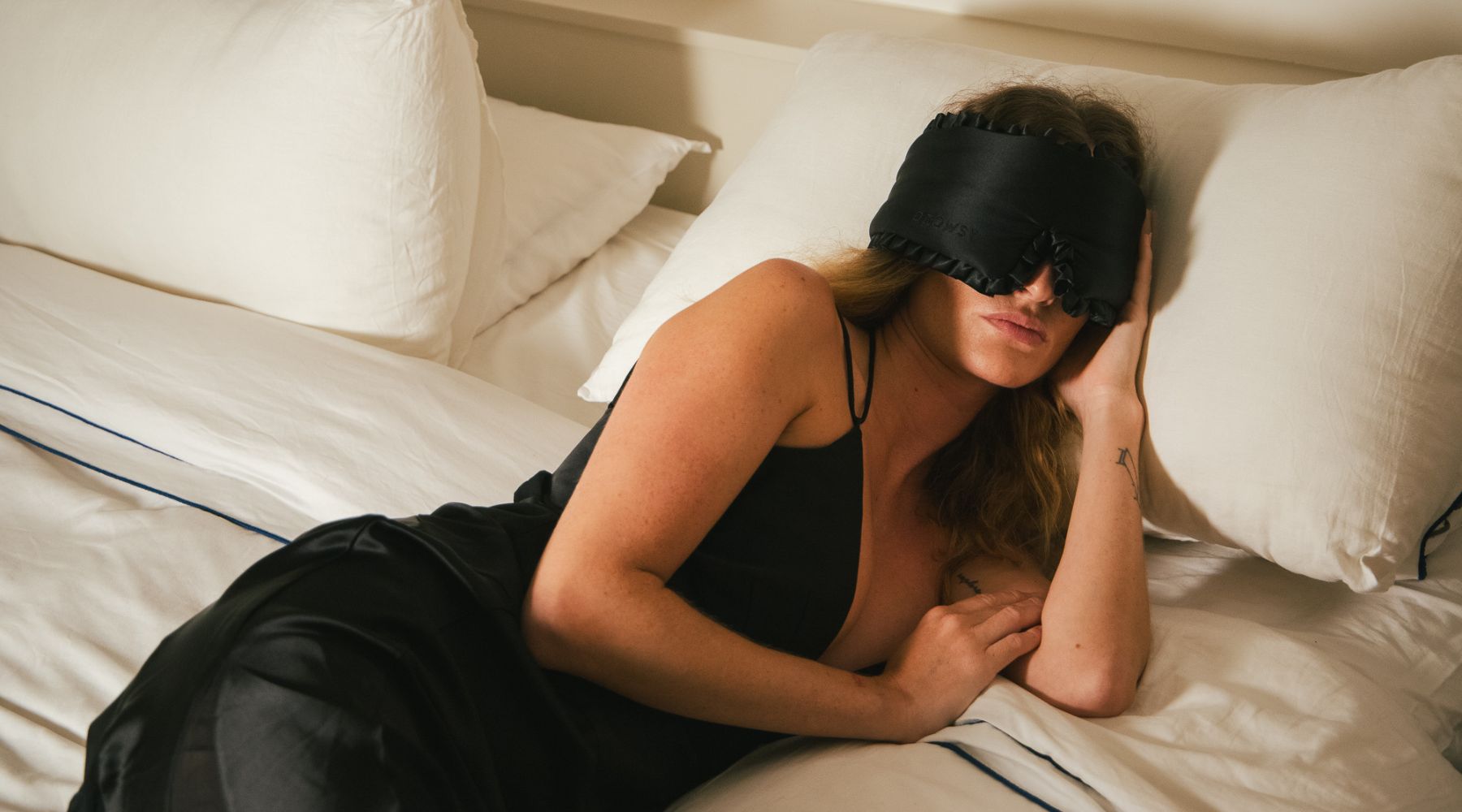
If you wear a sleep mask, consider one that blocks light completely. Drowsy's silk sleep masks create total darkness whilst remaining comfortable enough that you barely feel them.

For your skin:
Not all sunscreens protect against blue light. Regular broad-spectrum sunscreen blocks UV exposure but often doesn't address visible light. Tinted sunscreens with iron oxide can provide better blue light protection because the pigments physically block visible light.
Look for mineral sunscreens with zinc oxide or titanium dioxide. These create a physical barrier. You can also add antioxidants to your skincare routine. Products with vitamin C can help neutralize free radicals caused by blue light exposure. Antioxidant-rich skincare gives your skin backup defenses against oxidative stress.
Take screen breaks during the day. Every 20-30 minutes, look away from your screen. This gives your skin a break from blue light damage. Consider lower-blue-light-intensity LED bulbs if you want to reduce blue light in your home.
What this means for you
You're not going to eliminate blue light exposure entirely, and you don't need to. Blue light during the day is fine, helpful, even. The issue is excessive exposure, particularly at times when your body expects darkness. Late-night scrolling, working on your laptop in bed, bright screens right up until you close your eyes. Small changes can make a difference. Being more intentional about when and how you're exposed to blue light is one of those everyday habits that compounds over time for your sleep and skin health.