


 All masks
 Original masks
 Special edition masks
 Eyelash-protecting masks
 Featherweight masks
 Hotel Paradiso
 Breakfast at Drowsy
 Sleep and the City
 Swarovski® embellished
 Hyalo Silk Pillowcases
 Pillowcases
 Weighted blankets
 Bundles
 Gift sets
 Gift card
 Gift guide
 Bridal
 All travel accessories
 Necessaire
 Weekend bag
 Carry pouches
 Caps
Caps
 Pillow spray
 Candle
 Body care
 Supplements
 Scrunchies


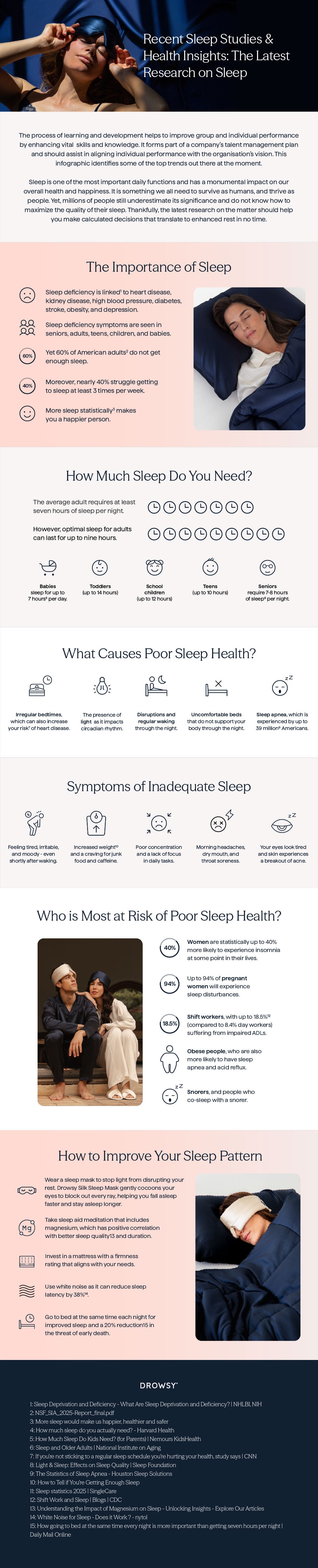
Recent sleep studies & health insights: The latest research on sleep
The process of learning and development helps to improve group and individual performance by enhancing vital skills and knowledge. It forms part of a company’s talent management plan and should assist in aligning individual performance with the organisation’s vision. This infographic identifies some of the top trends out there at the moment.
Sleep is one of the most important daily functions and has a monumental impact on our overall health and happiness. It is something we all need to survive as humans, and thrive as people. Yet, millions of people still underestimate its significance and do not know how to maximize the quality of their sleep. Thankfully, the latest research on the matter should help you make calculated decisions that translate to enhanced rest in no time.
The Importance of Sleep:
-
Sleep deficiency is linked1 to heart disease, kidney disease, high blood pressure, diabetes, stroke, obesity, and depression.
-
Sleep deficiency symptoms are seen in seniors, adults, teens, children, and babies.
-
Yet 60% of American adults2 do not get enough sleep.
-
Moreover, nearly 40% struggle getting to sleep at least 3 times per week.
-
More sleep statistically3 makes you a happier person.
1: Sleep Deprivation and Deficiency - What Are Sleep Deprivation and Deficiency? | NHLBI, NIH
2: NSF_SIA_2025-Report_final.pdf
3: More sleep would make us happier, healthier and safer
How Much Sleep Do You Need?
-
The average adult requires at least seven hours of sleep per night.
-
However, optimal sleep for adults can last for up to nine hours.
-
Babies sleep for up to 17 hours5 per day.
-
Toddlers (up to 14 hours), school children (up to 12 hours) and teens (up to 10 hours) need more sleep than adults.
-
Seniors require 7-8 hours of sleep6 per night.
4: How much sleep do you actually need? - Harvard Health
5: How Much Sleep Do Kids Need? (for Parents) | Nemours KidsHealth
6: Sleep and Older Adults | National Institute on Aging
What Causes Poor Sleep Health?
-
Irregular bedtimes, which can also increase your risk7 of heart disease.
-
The presence of light8 as it impacts circadian rhythm.
-
Disruptions and regular waking through the night.
-
Uncomfortable beds that do not support your body through the night.
-
Sleep apnea, which is experienced by up to 39 million9 Americans.
7: If you’re not sticking to a regular sleep schedule you’re hurting your health, study says | CNN
8: Light & Sleep: Effects on Sleep Quality | Sleep Foundation
9: The Statistics of Sleep Apnea - Houston Sleep Solutions
Symptoms of Inadequate Sleep:
-
Feeling tired, irritable, and moody - even shortly after waking.
-
Increased weight10 and a craving for junk food and caffeine.
-
Poor concentration and a lack of focus in daily tasks.
-
Morning headaches, dry mouth, and throat soreness.
-
Your eyes look tired and skin experiences a breakout of acne.
10: How to Tell if You’re Getting Enough Sleep
Who is Most at Risk of Poor Sleep Health?
-
Women are statistically up to 40% more likely to experience insomnia at some point in their lives.
-
Up to 94% of pregnant women will experience sleep disturbances.
-
Shift workers, with up to 18.5%12 (compared to 8.4% day workers) suffering from impaired ADLs.
-
Obese people, who are also more likely to have sleep apnea and acid reflux.
-
Snorers, and people who co-sleep with a snorer.
11: Sleep statistics 2025 | SingleCare
12: Shift Work and Sleep | Blogs | CDC
How to Improve Your Sleep Pattern:
-
Wear a sleep mask to stop light from disrupting your rest. Drowsy Silk Sleep Mask gently cocoons your eyes to block out every ray, helping you fall asleep faster and stay asleep longer.
-
Take sleep aid meditation that includes magnesium, which has positive correlation with better sleep quality13 and duration.
-
Invest in a mattress with a firmness rating that aligns with your needs.
-
Use white noise as it can reduce sleep latency by 38%14.
-
Go to bed at the same time each night for improved sleep and a 20% reduction15 in the threat of early death.
13: Understanding the Impact of Magnesium on Sleep - Unlocking Insights - Explore Our Articles