All masks
 Original masks
 Special edition masks
 Eyelash-protecting masks
 Featherweight masks
 Hotel Paradiso
 Breakfast at Drowsy
 Sleep and the City
 Swarovski® embellished
 Hyalo Silk Pillowcases
 Pillowcases
 Weighted blankets
 Bundles
 Gift sets
 Gift card
 Gift guide
 Bridal
 All travel accessories
 Necessaire
 Weekend bag
 Carry pouches
 Caps
Caps
 Pillow spray
 Candle
 Body care
 Supplements
 Scrunchies


Claustrophobic in a sleep mask? What to look for so you can blink, move, and relax
You put on a sleep mask, and something in your nervous system immediately says no.
It's not about the mask being uncomfortable. It's the sensation of fabric on your face combined with pressure and the feeling that you can't move freely. Your eyes can't blink the way they normally do. You can feel the edges pressing against your temples. Your brain interprets this as confinement, and your body's panic response kicks in before you even lie down.
If that's you, you're not broken. Many people feel claustrophobic wearing sleep masks. The good news is that feeling typically has nothing to do with whether you can actually wear a mask long-term. It's about finding the right one and giving your nervous system time to realize it's not a threat.
The problem is usually the design
Most sleep masks are designed with one job in mind: blocking light. They're not designed to reduce claustrophobic sensations. A flat mask presses directly against your eyelids, eliminating the space your eyes need to move naturally. You feel trapped the moment you put it on.
The difference between a claustrophobia-triggering mask and one you'll actually wear comes down to three things: whether you can blink freely, how much the mask weighs, and how tight the straps need to be to stay in place. Get those wrong, and your body stays in panic mode no matter how many nights you try.

Contoured masks create the space you need
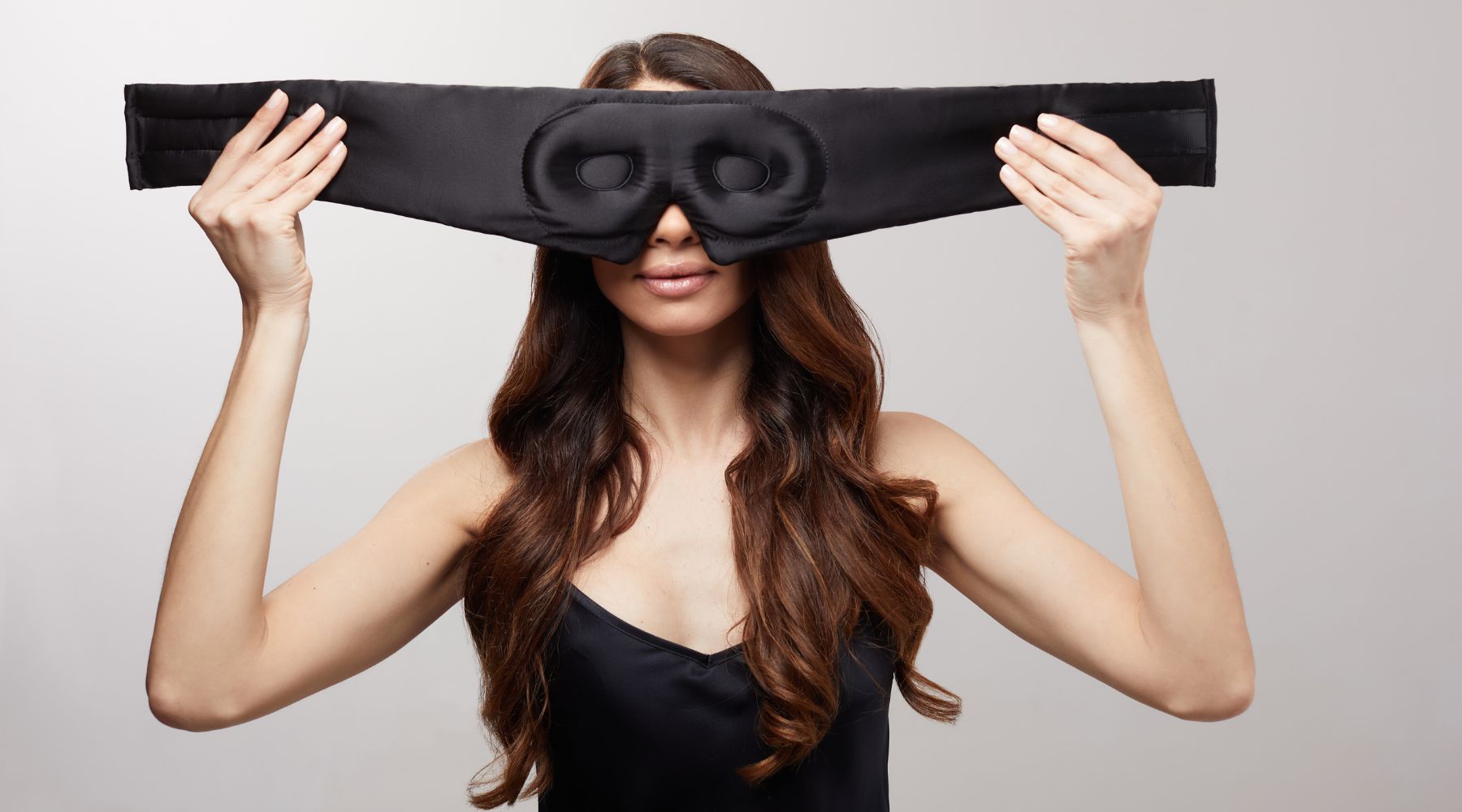
A contoured mask with deep eye cups is a completely different experience. The cups create actual air space around your eyes so you can blink naturally without the mask material stopping you. There's room between the mask and your face instead of pressure against your skin.
The difference shows up immediately. Your eyes can move, your face doesn't feel clamped. The mask is still there, but it doesn't feel like you're sealed in a box. For people who experience anxiety around facial restriction, this design feature alone can be the difference between wearing the mask for two nights and actually keeping it.
Material weight matters
A heavy mask pressing against your face triggers that trapped sensation every time. A lightweight silk mask barely registers. You can feel it's there, but it doesn't create the weight that signals danger to your nervous system.
Silk also creates less friction against your skin, which means it doesn't stick or cling the way synthetic materials do. That subtle difference in how the material feels against your face is part of why some people can adapt to silk masks while synthetic ones trigger constant anxiety. Your body is responding to real physical sensations, not just psychological fear.
Drowsy's silk masks use 22 momme mulberry silk, which is so lightweight you forget you're wearing it. The Featherweight collection is even thinner if you prefer minimal coverage. That weight difference helps your nervous system calm down instead of staying on high alert.
Get the straps right so they don't trigger anxiety
A strap that's too tight amplifies the claustrophobic sensation because you literally feel like your head is being clamped. This triggers stress hormones and anxiety levels spike before you even try to sleep.
An adjustable strap lets you secure the mask without it feeling like it's suffocating you. Spend time adjusting it while you're awake, not while you're trying to sleep. You want it snug enough to stay in place but loose enough that you could slip a finger underneath.

How to adapt instead of abandoning the mask
Most people try a claustrophobia-triggering mask one night, panic, and never try again. Your body never gets the chance to realize the mask isn't dangerous. Start differently.
Put on the mask while you're awake and do something that keeps your attention. Watch TV, read, don't focus on how the mask feels. Just let your nervous system get bored with it. Do this for ten or fifteen minutes, several times across a few days.
When you do sleep in it, take it off the moment you feel panic. This isn't about pushing through, but about teaching your body gradually that the sensation isn't a threat. By night three or four, most people report it's noticeably less claustrophobic. By week two, it's just something on their face.
If panic hits while you're wearing it, deep breathing helps reset your nervous system faster than fighting the sensation. Slow exhales signal your body that it's safe. That combination of gradual exposure plus breathing work is what actually rewires the panic response.
The mask that works is usually the one you'll wear
Drowsy's eye masks are built for people who need that space around their eyes. The deep cups let you blink, the silk is lightweight, and the adjustable strap means you're not choosing between panic and security.
The first night is hard. The second night is less hard. By night five, your brain stops treating it like a threat. You're not overcoming some fundamental incompatibility with masks. You're just letting your nervous system adapt to a sensation it initially interpreted as danger.
Find the right design and give yourself time. That's it.